
1. Crap job. How many people will chose a job where their safety at work is ranked lower, much lower than a patient who chooses to assault, injure, bite, use weapons and so on? Some patients are psychotic, but others are ASPD, BPD, violent criminals, toddlers in an adult’s body, psychopaths, but all are given the same rights that staff are denied. Since Labour were elected, ‘two tier justice’ has become a common saying, but these two tier rights have been at play for much longer. I’m going to list and show you those rights.
2. Infantilisation (deliberate) of patients, treating them as perpetual victims (*a) and benefit recipients instead of emphasising personal responsibility, resilience, personal agency, personal growth, risk-taking and more.
What should be happening instead? We (staff and the service’s ‘leaders’) should be expecting and fostering personal growth, change, self-control, taking control of your life and changing its direction, from the patients who come under our care and supervision.
How do you do that in the context of managing violence, restraining etc? You do it by uncompromisingly challenging and confronting violence every single time they do it. I remember doing that, although sadly it didn’t happen every time. Even back then we had fluffy people (psychologists of course, but nurses and managers too) who thought holding the patient to account and requiring an explanation and even an apology was simply horrid, Henry. But even so, we often sat the pt down after it was all over and using the incident debrief process (*b) show them, every time, that they were responsible for their own behaviour and had to answer for it.
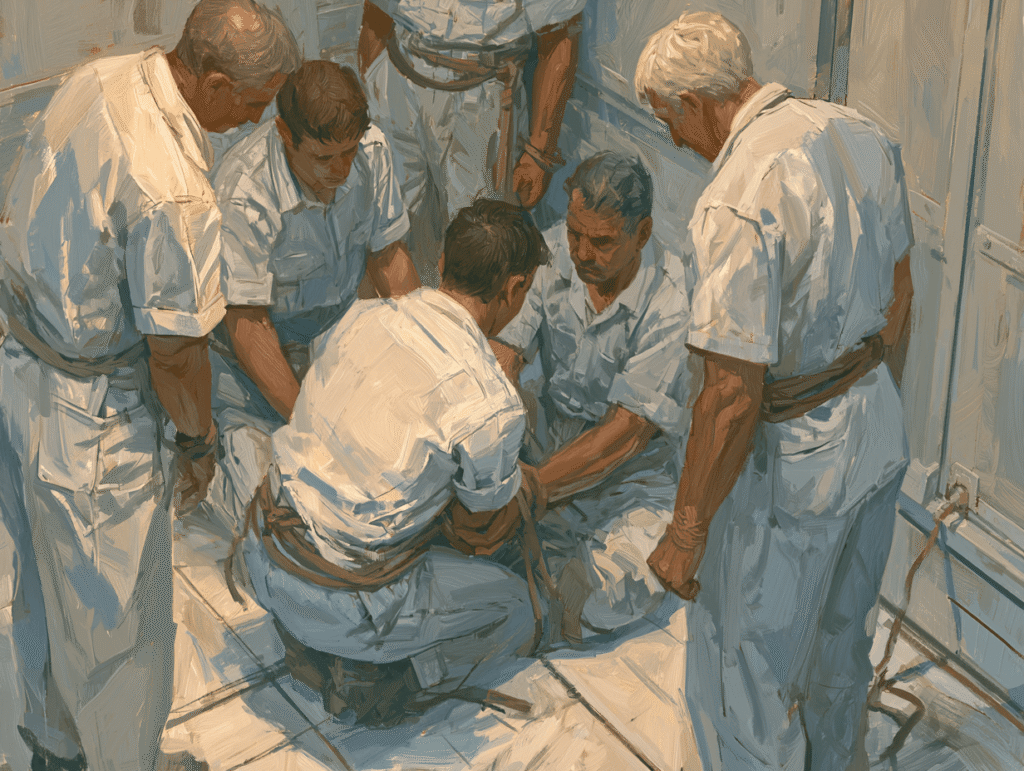
*a) A good example is the term ‘Behaviour that communicates distress’ and the ‘thinking’ (more like feelings, I suspect) that lie behind it. When I started the job, the term ‘behaviour problems’ was in the process of being replaced by ‘challenging behaviour.’ That light touch change isn’t so harmless. It sneakily removes the responsibility for the behaviour and for addressing/eliminating it from the person doing the behaviour (in mental hospitals that’s the patients) and onto the staff or services or public that have the cheek to find that behaviour to be challenging. A bit further down the line they made it more obvious and changed the name to ‘behaviour that challenges services’ i.e. it’s now the service’s fault for being so narrow minded.
NB Back then, challenging behaviour in an LD hospital could range from fighting, stealing, masturbating in public, head-banging, destruction of property – theirs, the hospitals, anybody’s (I lost a few textbooks to patients who loved shredding things) setting fires, escaping and screeching at the tops of their voices. Oh yes, I nearly forgot standing at the top of the stairs and urinating down them to watch the yellow waterfall. All behaviours, by the way, however amusing some were, that stopped the patient moving out of hospital.
And now we have to use a term which absolves the patient of all responsibility for naughty, scampish, bad, wicked or evil behaviour because whatever they are doing is only ‘behaviour that communicates distress.’
On one recent course, the instructor, no doubt reading from the BILD accredited material said, ‘there is always a reason’ (he means a justifiable reason, an excuse) for property damage, violence etc and ‘staff need to show empathy at this time.’ Shigpit.
*b) You will never guess whether, among all the prescribed and compulsory form filling, checks and self-doubting demands placed on staff after a restraint, a compulsory debrief for the violent patient is also required.
Continues in ‘Themes you’ll see…’ Pt 2
Leave a Reply