
I know a few older nurses who ‘always wanted to be a nurse’. From childhood. How did they know what being a nurse was? Well, unless Mum was a nurse herself, they probably didn’t know for sure. What they pictured no doubt had some romanticised elements baked in but they would have expected to spend their working day caring for ill people and helping make them better. And for the most part, that’s what their job turned out to be. Things were easier and clearer then.
Here’s a quote from ‘Why Britain is ruined beyond repair.’
‘I had a conversation once with an old school time served nurse like me. He remarked that nursing was the job he expected it to be when he applied and trained but it isn’t now. He wondered whether the OT and assistant psychologist we worked with imagined (before they started) they’d spend most of their time sitting in meetings and reading and writing on a computer. We suspected they had no idea what the reality would be like.’
Young people won’t learn the truth about modern day nursing from Holby City or Casualty (*d) and definitely not from the MSM or the NHS careers site. Read this glowing tosh trying to sell a nursing career to starry eyed young people.
‘We are nurses. We are changing lives.
No two days are the same in nursing – it’s one of the most dynamic and rewarding roles within the NHS. And with ongoing training and the support of your team, you’ll be able to make it exactly what you want it to be.’ (my italics)
That’s only true as long as what you want it to be is having both hands tied behind your back, being forced to ‘care’ according to a list of inputs prescribed by a technocrat behind a desk and to fill in e-forms so the Trust will be paid by overpaid frauds for meeting targets. Untrue if you wanted to be doing something else.
Now instead try this from Dr Geraldine Strathdee’s ‘Rapid review into data on mental health inpatient settings: final report and recommendations.’
Her observations were damning.
‘When we first established the review, one of our assumptions was that the data burden on staff was too high and that we would need to make recommendations to reduce it. However, we were not prepared for the sheer scale of the issue… it was common for frontline nursing and clinical staff to spend as much as half their shifts in the office entering data. We were told by Trust leaders that roughly half of their analysts’ time was used to flow data to national and local data sets instead of providing support for quality improvement to frontline staff.’
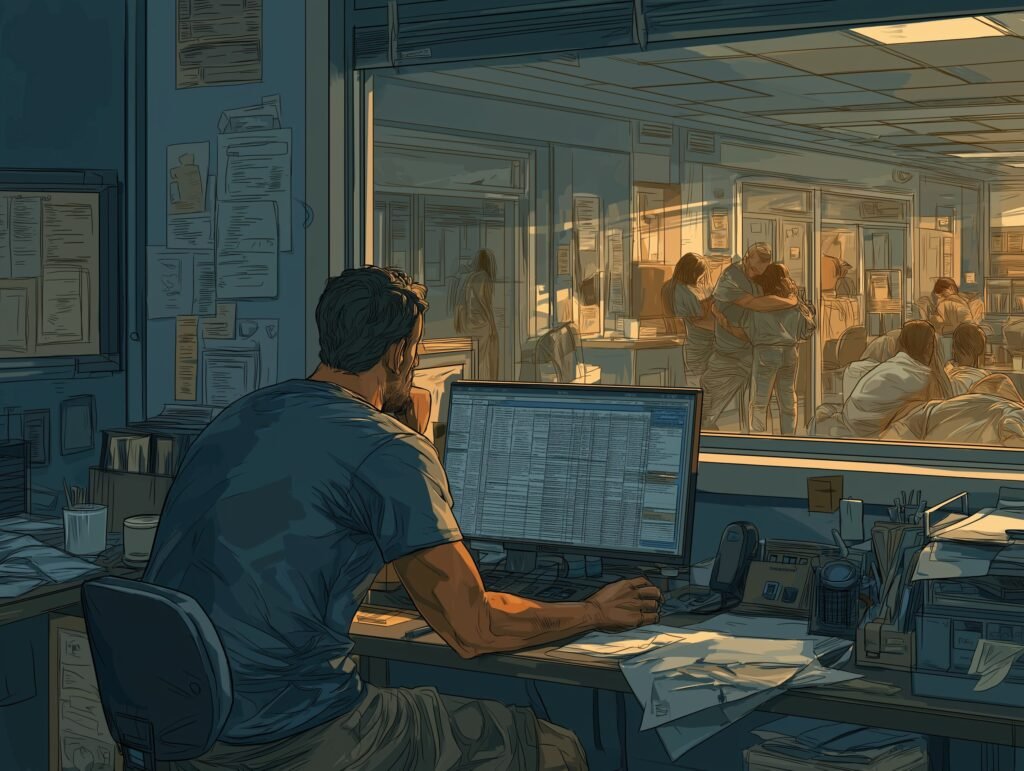
Well can you Adam and Eve it? An honest senior suit (*a) who’s prepared to stick it to the data and information meat-grinder. Imagine ‘as much as half your shift’ filling in e-forms. For what purpose? (*b)
Dr Strathdee’s report has something to say about that too. It’s too wordy so I’ve trimmed it. The report is online here.
‘We found that staff at all levels did not receive value from the data they enter – too little comes back to frontline staff (to) provide them with insights about their patients…. At all levels, staff could recall almost no feedback from (their e-forms) that was useful to help them do their jobs.’
Yes well, let me tell you something. Filling in bullshit forms will never provide me with insights about my patients. That’s what talking with them and listening to them is for. That’s what we write up extensive, detailed clinical notes for. The forms aren’t even intended to achieve that, even though the suit wants to infer it might happen accidentally.
*a) former National Clinical Director for Mental Health. i.e. a suit inhabiting the stratosphere.
*b) De-coded = for precisely NO purpose.
One more from the report. ‘Senior clinical leaders cited data burden as one reason for staff retention challenges.’
Here, the report’s writer is guilty of using managerial gobbledegook to make something sound nicer.
Try this instead. ‘Soul-selling, bullying, performance obsessed managers (*c) say one reason staff leave and can’t be replaced is because they are sick to the back teeth of being forced, by the threat of being performance managed and disciplined, to spend the hours they would rather spend with patients – the job they applied for – filling in clunky, user-unfriendly, click the wrong button and lose everything you just inputted and have to start from the beginning again e-forms about meaningless crap that no manager ever tells them what it was used for.
*c) These wretches are not leaders and they’re not clinicians.
Now, this is the key takeaway for me. The report publishes 13 recommendations. Some are highly resource intensive. And there’s loads still to come, at this point you’re only 1/8th of the way through the report. But even if you read to the end, you’ll find no recommendation stating –
‘This isn’t working. None of this data helps the front-line staff treat the patients. In fact, it is harmful, a serious impediment and burden to direct patient care. It causes staff to resign in frustration. It wasn’t supposed to be this way. We didn’t intend to cause this harm. We should stop collecting data and information the way we are doing first thing tomorrow morning and go back to the drawing board. At least that way we can be sure we’re eradicating that harm that we never meant to cause.’
There should be only one recommendation. That one. But instead we get this doubling down.
‘While it was clear that data and information provided by frontline staff was critical to ensuring safety…this should be streamlined as far as possible, focused on the most important things, and tools should be made available to make entering data as easy as possible.’ My emphasis.
Wrong. Utterly. So wrong it couldn’t be wronger. Data from e-forms is NOT critical to patient safety. It’s only critical to running about like a headless chicken after the event and prompting lots of office-based hand-wringing about patient safety.
And I foresee a whole new raft of posts to come about how some committee (full of women I’ll wager) has been given the power to decide ‘safety,’ gets trump card status and not better values like therapeutic, improvement, excellence, treatment, cure, maintenance and amelioration of symptoms, quality of life and so on.
It’s wrong because safety on the wards, outpatient clinics and in the community is actually dependent on action by the staff on the ground.
You don’t stop a fight by asking the patients to wait until you fill in a form.
You don’t prevent a death by filling in a questionnaire checking if you’ve been trained in approved use of the ligature knife before you unlock it from the box.
If a patient is so suicidal they need admission, the first thing you do to make them safe is make that decision. (Ok, that’s followed by a lot of paperwork, much of it unnecessary) You don’t go check an algorithm or spreadsheet first, you use your clinical experience.
If a patient is relapsing in the community, you get them in to been seen by a doctor.
And so on.
Staff hate filling in bullshit forms because they know they are bullshit, they know they don’t make any difference, they know their only purpose is to provide meaningless data for management to bash them with and to provide unjustifiably well-paid work for frauds in suits to sit all day playing on computers AND because they stop us actually working with the patients.
Data gathering, e-forms and all the collating and distributing it once it’s been gathered is a massive rort on the taxpayer. This perpetually accreting behemoth is a major factor in why NHS funding grows and grows but nobody sees improvement at the sharp end. Those data that are important can be gathered (and often already are) in other ways that don’t steal hours from front-line staff professionals’ clinical time.
This is old school mental nurse’s recommendation. It didn’t take an eye-wateringly expensive investigation to get there. Just a professional lifetime of experience, observation, the courage to speak up and cast-iron integrity.
Don’t make recommendations managers are guaranteed to ignore because other more powerful bodies are, at the same time, demanding they keep doing what they’re doing. Stop your measuring. It isn’t working. Stop now and go back to the drawing board. When you come back with your next genius idea, check first (before you shoehorn it in) to see if in the downtime, clinicians and patients’ lives were made better. Ask, did things get better because staff weren’t having to waste their time measuring bs? Ask, did recruitment and retention improve? I already know what the answer would be.
*d) In its early days, Casualty was a great nursing drama, didn’t pull punches, didn’t sanitise death and trauma, was mostly about the nurses, not the doctors. If even a tenth of managers were like Ewart Plimmer we wouldn’t be up sh*t street now. Then it became a soap. ‘Angels’ was way more authentic and gritty but finished in ’83. C4s ‘No Angels’ is worth a watch. But I award the gold medal to ‘Bodies’ by Jed Mercurio though. True at a cellular level right down to the cover-ups, betrayals, gaming by a cynical, psychopathic CEO and the two diversity hires who attend all meetings but say and do precisely nothing.
Leave a Reply