
Here, I’m intertwining (into a rope) some of the strands I’ve covered previously, strands like ‘Least restrictive diktat’, ‘Free – to commit suicide by dealer’ to show you what you are paying for. Because you won’t read this elsewhere. Here are some heavily edited (for confidentiality) but completely true summaries.
A. Imagine a series of streets where the council house our frequent fliers, collectively, with the police’s most loyal repeat customers. These people live in utter chaos, unable, and unwilling even if they were able, to avoid wasting their entire benefit on drugs.
(Ask, Polly, what does one sell to buy drugs with after all the money’s gone? (*i) I bet you don’t dare look.)
These patients have precisely zero chance of staying off drugs, staying well and living some kind of happy, healthy, enjoyable and fulfilling life. Discharge – relapse – long period of getting worse – eventually sectioned and admitted again – patched up and sent back out to the top of the cliff – chaos – repeat until prison or death.
Try to imagine the neglect their babies and toddlers are suffering. Even before they were born those children were doomed. Filth and litter everywhere, needles, blocked drains, anything not nailed down is stolen. And even worse, these people don’t separate their recycling into the correct containers! Britain could do something, many things, to prevent a lot of these harms. But it cannot be done liberally.
*i) I had a pt who would sell his – rhymes with septum – on a locally famous road until he had sufficient to buy – I can’t remember the amount – enough synthetic to sit and smoke to reach oblivion. A seriously harmful addiction on top of a real, serious and enduring mental illness. In what universe is that freedom and independence?
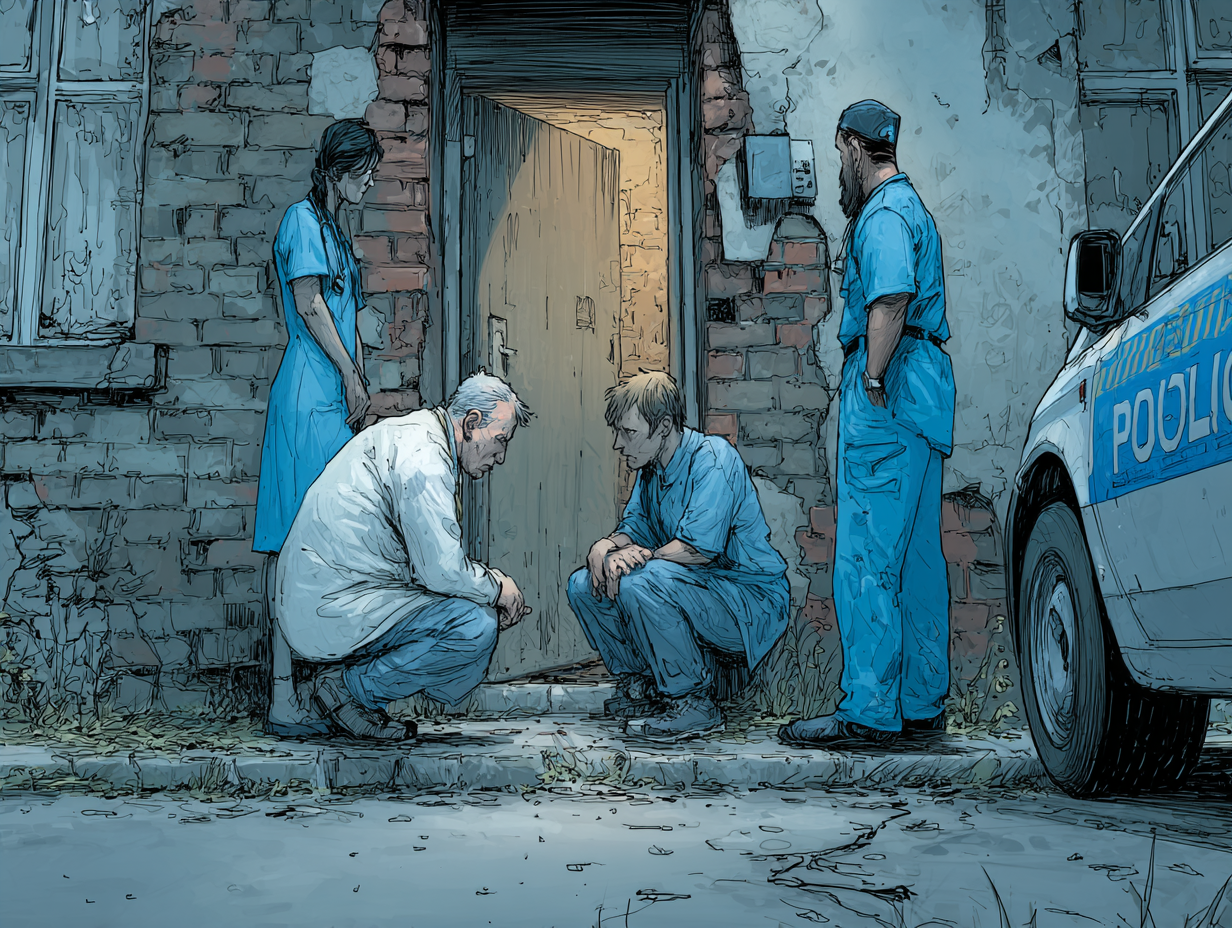
B. Here’s a report about a chronic schizophrenic who, within a week, maybe less, has (I was going to say whose mental state has deteriorated, but of course it’s worse than that, because the whole person has deteriorated, nutritionally, physically, health-wise, emotionally, financially – and spiritually
This person had to be visited to give their depot – no money left to come in to clinic – and guess what we found?
1. The electricity had been cut off and he’d been dismantling the sockets to get into the wiring – thank heavens there was no power to zap him. In the winter, this (combined with malnutrition) can lead to hypothermia and death.
NB In some supported accommodation, staff can’t forcibly enter rooms to search, check on patients they haven’t seen for, say 24 hrs. What twat wrote that policy and who did they think they were helping?
In independent accommodation, some patients, especially those with a violence or hostage-taking alert on their file, are, if they deteriorate like the one above, at risk of only being found when the police break in (I’ll tell you later how hard to arrange that is) and find the cat (or worse) has been helping itself.
2. Blood and smeared faeces all over the toilet and bathroom, urine, putrefying foodstuffs, maggots, flies and multiple inches of rubbish on the floor. Eating out of tins and packets (think a Pot Noodle with no hot water because the elec is off) which is where the flies were.
3. Descriptions such as uninhabitable, squalor, dreadful. This is from hardened mhs staff who’ve seen it all (and yet are forced to be circumspect in their official language)
4. The ‘furniture’ if you can call it that, is dismantled, broken, filthy, covered with rubbish and bric-a-brac and broken electrical equipment that the hoarder patient brings home.
5. You can’t charge your phone, never mind access the internet when the power is off. So the opportunity for the patient to ask for help, when mental health phone to check up, is lost.
Now, there are heaps of patients living in dirty, litter-strewn housing, with ashtrays so full of ash and butts they look like a magic trick, yet they are not (yet) unhygienic.
NB in their ‘supported’ accommodation, their rooms don’t receive regular cleaning, as they would in hospital, nor does the laundry, crockery etc get done unless the patient does it. Even so, they are still doing reasonably ok, comparatively anyway. These patients wouldn’t need hoiking out of their flats and taking to the new bins – although often they might later on, eventually, when the neglect is compounded. What these patients need and should be receiving, compulsorily, not ‘would you mind awfully, Sergeant Wilson,’ but as a condition of the tenancy, is help. Help to cook healthy meals, do the laundry and cleaning, getting out of doors for healthy, social activities. (Help to turn down the stereo when staff, not the patient, say it’s too loud.)
Funnily, you and I are paying for that level of service, on paper anyway, but for a series of reasons (legal, procedural, policies written by twats, national legislation, low quality staff, low quality training, pay and conditions) it never gets from the contract to the patient.
Continues in ‘The state of play you are paying for Part 1b’
Leave a Reply